How to Build a Ladder Using Steel Profiles: Complete Guide
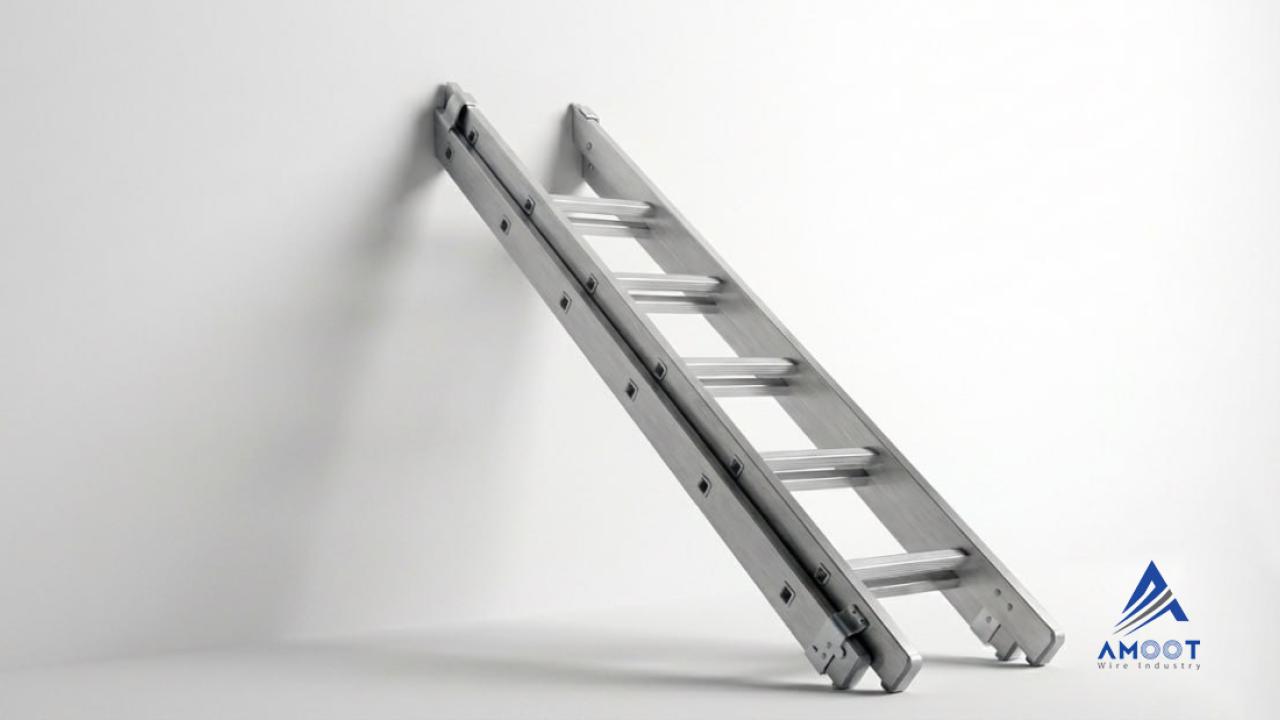
Building a ladder with steel profiles is one of the most practical and economical methods for creating metal equipment for home, industrial, and professional use. If the right steel profile is selected and the steps of design, cutting, welding, and assembly are carried out carefully, the result will be a strong and standard ladder. This comprehensive and experience-based guide explains how to build a sturdy, safe, and durable ladder using steel profiles.
Step-by-Step Guide to Building a Ladder with Steel Profiles
If made correctly, a profile-based ladder can be used for many years without damage. To ensure a precise and standard construction process, you must have proper knowledge of suitable profiles, essential tools, and design steps before starting. All stages are explained in order below.
Important Safety Note Before Starting
For ladder construction, safety must be your top priority. Ignoring factors such as load capacity, improper welding, or incorrect assembly may lead to accidents. Pay close attention to all safety considerations.
Choosing the Right Profile for Ladder Construction
Before anything else, you must determine the balance between the final weight of the ladder, its intended use, and its load-bearing capacity. Light profiles are suitable for light applications, while heavy profiles are ideal for industrial ladders. For example, 20×20 mm profiles are suitable for home ladders, 30×30 mm for professional ladders, and 40×40 mm for fixed or industrial ladders. Sometimes using a rectangular profile for ladder rails increases longitudinal strength and performs better than square profiles.

Required Tools
To build a metal ladder, you need tools such as a metal tape measure, angle meter, steel square, angle grinder, cutting disc, welding machine, and 6013 electrodes. A drill with metal bits is also necessary for drilling metal joints, along with clamps to secure profiles during welding, and a hammer and pliers for adjustments. For finishing, you’ll need anti-rust primer, industrial paint, anti-rust coating, and polishing materials.
Initial Planning and Ladder Design (Important)
Before cutting the profiles, prepare a complete ladder design. This helps identify all potential issues before construction begins. At this stage, determine the number of steps, step spacing, total height, slope angle, ladder type (double-sided, folding, fixed, or professional), and profile thickness. Proper design ensures that all pieces fit precisely during assembly. If you are building a DIY ladder, choose dimensions that avoid excessive weight and make the ladder easy to carry.
Complete Construction Steps
After gathering tools and preparing a visual design, the construction process begins. Below are the steps explained one by one.
Measuring and Cutting the Profiles
Use a metal tape measure and steel square to determine the rail lengths and step positions. Cut the pieces using an angle grinder. The profiles must be cut perfectly square and straight to avoid misalignment or wobbling during assembly. If using light profiles, apply less pressure while cutting to avoid damaging the edges.
Building the Base and Main Rails
After cutting the profiles, start building the ladder base. For maximum strength, choose the proper profile thickness for the rails. Based on experience, steel profiles with appropriate thickness are the best option for ladder rails. For double-sided or folding ladders, additional bracing is needed to support the structure.
Welding the Steps and Aligning Them
Place the steps onto the rails and align them using an angle meter and steel square. Welding is done in two stages using 6013 electrodes: first tack welding for initial fixation, then full welding for maximum strength. The welding method must ensure that the steps experience minimal deformation under direct pressure. At the end, weld edges are cleaned using a grinding disc to achieve a smooth finish.
Final Assembly, Installing Additional Components, and Painting
During assembly, all parts must be inspected for angle accuracy, alignment, weld quality, and structural strength. For folding ladders, install bolted joints or hinge connectors. Plastic ladder feet should be installed at the bottom of the rails to prevent slipping. After sanding, apply anti-rust primer followed by industrial paint or oil-based paint. Finally, add a polishing layer for enhanced protection against moisture, impact, and scratches.
Safety Considerations
Throughout the entire construction process, you must use safety glasses, work gloves, workwear, safety shoes, and a dust-proof mask. Welding safety procedures must be followed carefully. Important points include: using gloves, masks, and safety glasses; checking the welding machine and grinder; securing the profile before cutting; avoiding working in wet or slippery environments; keeping cables away from the cutting area; and testing ladder stability after assembly.
Comparison of Profile-Based Ladders with Other Types
Profile ladders are more economical than aluminum ladders but heavier. Compared to wooden ladders, they offer higher resistance to moisture and impact. Compared to ready-made industrial ladders, they provide greater flexibility in design and can be customized to suit workshop or home needs. A handmade ladder built with heavy profiles has almost no difference from a factory-made model, provided all standards are observed.
Profile Selection Table for Different Ladder Types
| Ladder Type | Recommended Profile | Description |
|---|---|---|
| Home Ladder | 20×20 Profile | Lightweight, suitable for daily tasks |
| Professional Ladder | 30×30 Profile | High strength at medium height |
| Industrial Ladder | 40×40 Profile | High load capacity and long durability |
| Folding Ladder | Rectangular Profile | Better balance in folding joints |
Conclusion
This article aimed to provide a fully practical, step-by-step guide to building a ladder using steel profiles. With the right profile choice, precise cutting, proper welding, and full safety compliance, you can build a strong and reliable ladder. Small details such as plastic ladder feet, correct painting, and step alignment have a major impact on the final quality. If you plan to build larger, double-sided, or folding ladders, simply follow the same principles with greater precision.
Frequently Asked Questions
Which profile size should I use for ladder construction?
For a home ladder, use 20×20 mm. For professional or industrial ladders, use 30×30 mm and 40×40 mm respectively.
Is it possible to build a ladder without welding?
Yes, in DIY projects you can use bolted joints, but welded ladders provide greater strength and durability.
How do I check the safety of a profile ladder?
After assembly, check the ladder’s load capacity, step strength, weld quality, and rail alignment