What Is Chain-Link Fence Mesh? A Simple Explanation
If we want to explain in the simplest yet most accurate way what chain-link fence mesh is, we can say it is a type of metal or wire mesh made by interweaving strands of steel wire, used to create boundaries, security, and protection in different environments. Because of its formability, fast installation, reasonable price, and high variety, chain-link fencing is one of the most popular options for fencing in Iran.
In this article, we get familiar with the structure and types of chain-link mesh and its applications. We also review the key characteristics of this type of wire so that you can fully understand what this mesh is and when it is the best choice.
Technical Definition of Chain-Link Fence Mesh
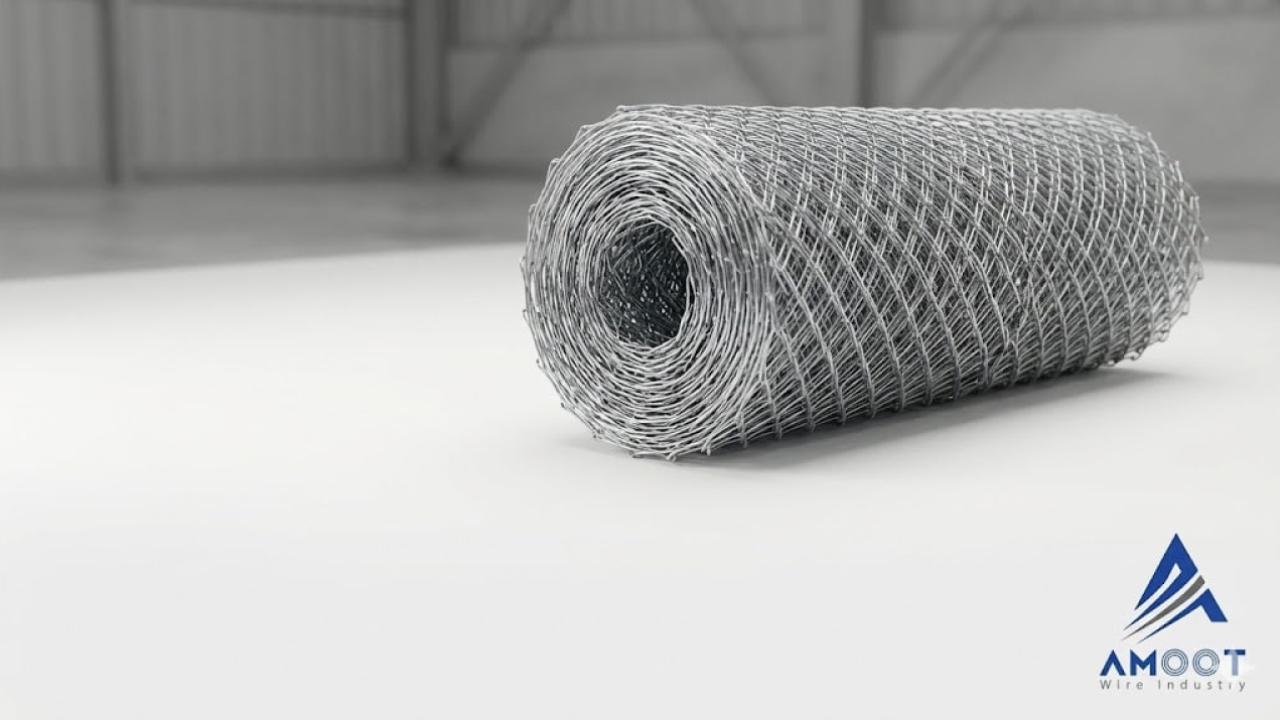
When we ask what chain-link fence mesh is, we are in fact talking about a wire product made from the orderly connection of steel wire strands, usually supplied on the market in fence rolls. This product is classified as fence mesh and, depending on the application, is made from galvanized wire, hot-dip galvanized wire, cold-galvanized wire, or PVC-coated wire.
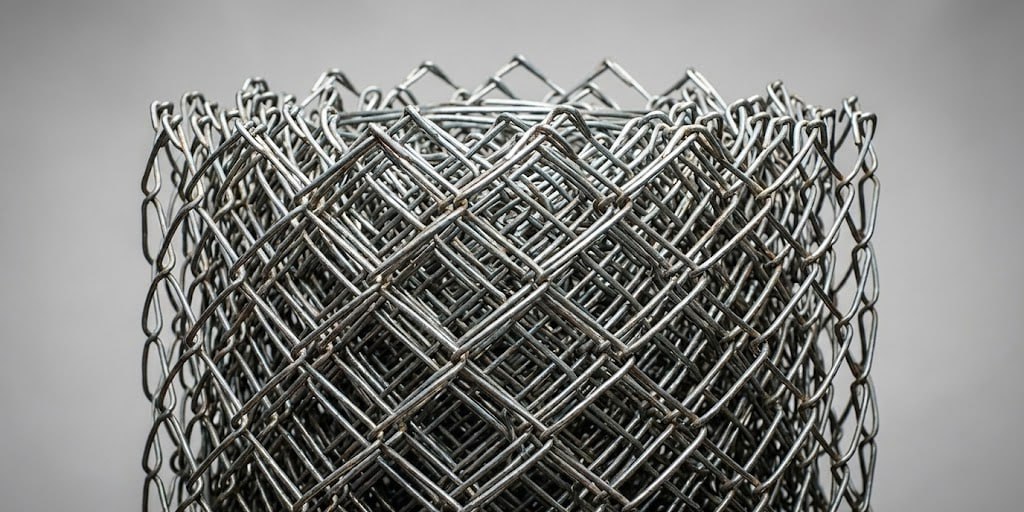
The diamond-shaped or square openings of the mesh, called mesh openings (Mesh), determine the level of strength, flexibility, and final appearance of the fence. The wire diameter (Wire Gauge) also has a direct impact on the resistance and durability of the product.
Components and Structure of Chain-Link Fence Mesh
To understand more precisely what chain-link fence mesh is and why it is so widely used in different projects, we need to examine its main components and structure step by step. At first glance, chain-link mesh looks like a simple metal grid, but behind this appearance there is a set of components, each of which plays an important role in its quality, strength, and lifespan.
Material and Main Structure of the Mesh
The core of chain-link fence mesh is made from steel wire. These wires are produced in three forms based on project requirements:
-
Galvanized wire
-
Hot-dip galvanized wire
-
Cold-galvanized wire
In some models, the wire surface is coated with PVC to both improve the appearance and increase resistance to rust. The visual form of the mesh is determined by the mesh openings (Mesh).
The openings can be diamond-shaped or square, and their size determines the type of application and the level of tensile strength of the mesh. On the other hand, wire diameter (Wire Gauge) is one of the most important technical criteria and directly affects the strength and durability of the fence.
The Role of Posts in the Structure
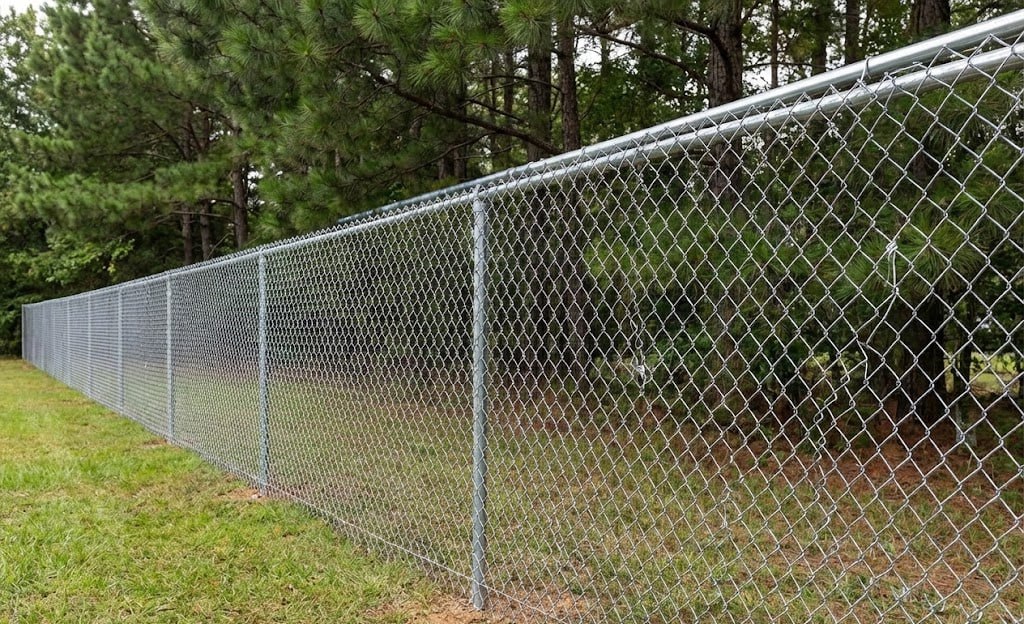
One important part that is often overlooked is the fence post. The posts are actually the supporting columns of the mesh and determine how stable and vibration-free the fence remains. The distance between posts, installation method, height of the posts, and their material all influence the final performance of the mesh.
Tension Wire and Its Function
To prevent the mesh from loosening or deforming along its length, tension wire is used. Tension wire acts like a locking element and creates the required tension along the fence. On long runs, the presence of tension wire increases flexibility and also prevents tearing at stress points.
Form of Supply and Installation
Chain-link fence mesh is usually produced in roll form, which makes transportation, storage, and installation easier. These rolls are supplied in different heights so they can be suitable for various needs such as security applications, garden or farmland use, and landscaping.
In general, the structure of chain-link fence mesh is a combination of steel wire, mesh openings, wire diameter, fence posts, tension wire, and fence rolls. The coordination between these elements determines how strong the mesh is, how long it will last, and in what type of project it will perform better.
Main Features of Chain-Link Fence Mesh
As one of the most widely used tools for boundary marking and protection, chain-link mesh has a set of technical characteristics that make it a standard and reliable choice for different environments. These features usually depend on the material of the mesh, coating type, wire diameter, mesh structure, and production method. Below we fully and technically review the most important key features of chain-link fence mesh.
High Resistance to Corrosion and Rust
One of the most important quality indicators of chain-link mesh is its galvanized coating. Hot-dip galvanized meshes, due to their thick zinc layer, have very high durability against environmental factors such as:
-
Humidity
-
Rain
-
Temperature changes
-
Outdoor exposure
This makes chain-link mesh suitable for farms, gardens, industrial environments, and humid regions.
High Strength and Tensile Resistance
Chain-link mesh is made from tensile steel wire, and for this reason it has high resistance against:
-
Impact
-
Animal pressure
-
Tension from installation
-
Physical changes
This tensile resistance prevents the mesh from being crushed, torn, or deformed over time.
Flexibility and Easy Installation
Chain-link mesh is produced in roll form, and this:
-
Makes transportation easier
-
Speeds up installation and reduces cost
-
Allows installation on flat or sloped surfaces
The flexibility of the mesh also makes it suitable for temporary, seasonal, or movable projects.
Long Service Life in Different Environmental Conditions
The combination of steel, galvanizing, and mesh structure gives chain-link mesh a long lifespan. Under standard conditions, a galvanized mesh remains in good condition for 10 to 15 years without quality loss. If it has a PVC coating, its durability—especially in very humid areas, near the sea, or in zones exposed to industrial pollution—will be even higher.
Selectable Heights and Mesh Sizes
Another key feature of chain-link mesh is its production variety. Depending on project requirements, it can be selected with:
-
Different heights (1, 1.5, 2 meters, etc.)
-
Different mesh sizes (5×5, 6×6, 7×7 cm)
-
Different wire diameters
This variety makes chain-link mesh suitable for both security applications and landscaping.
Applications of Chain-Link Fence Mesh
Chain-link mesh is one of the most widely used types of mesh for boundary marking and environmental protection. Due to its moderate weight, good strength, easy installation, and portability, it is used in various urban, industrial, agricultural, and even residential projects.
Depending on the type of mesh, wire diameter, and mesh size, it can be used to control movement, protect areas, separate sections, and create order in a space. For this reason, chain-link mesh is considered an economical and reliable option for a wide range of needs.
Main Applications of Chain-Link Mesh:
-
Fencing gardens and farmland
-
Separating villa yards, gardens, and residential spaces
-
Fencing sports fields
-
Boundary marking for workshops and construction sites
-
Protecting livestock and animals in farming environments
-
Controlling pathways and separating public spaces
Conclusion
Chain-link fence mesh is a simple yet efficient solution for boundary marking and environmental protection that, due to its moderate weight, flexibility, tensile strength, and long durability, is used in various urban, agricultural, industrial, and residential projects. Choosing the right mesh type, wire diameter, mesh size, and coating can guarantee performance, lifespan, and the visual appearance of the environment. Given its high variety, easy installation, and portability, chain-link mesh is an economical, reliable, and practical option for maintaining security and order in different spaces.
Frequently Asked Questions
What is chain-link fence mesh and what is it used for?
Chain-link fence mesh is a type of metal or wire mesh made from steel wire and is used for boundary marking, space protection, and movement control in gardens, farmland, residential yards, and industrial areas.
Which type of chain-link mesh is best?
If the environment is humid or outdoors, galvanized chain-link mesh or PVC-coated mesh are the best options because they have high resistance to rust and a long service life.
What is the difference between plain chain-link mesh and PVC-coated mesh?
Plain chain-link mesh has no coating and rusts more quickly in humid regions, whereas PVC-coated mesh has a protective layer, a better visual appearance, and higher durability.
Which factors affect the strength of chain-link mesh?
Wire diameter, coating type, mesh size, and the quality of fence posts and tension wire are the most important factors determining the strength and durability of the mesh.