What Is Rebar Placement? (Principles, Execution Stages, and Required Tools)
What Is Rebar Placement? (Principles, Execution Stages, and Required Tools)
Rebar placement refers to the set of operations in which steel bars are arranged in specific shapes and patterns and tied together with binding wire to form a structure capable of resisting tensile, bending, and shear forces. Since concrete is naturally strong in compression but weak in tension, it is the presence of rebar and the way it is connected that turns a structure into reinforced concrete. The stronger and more precise these connections are, the better the structure performs under seismic loads, dead loads, and live loads.
What Is the Purpose of Rebar Placement?
The main purpose of rebar placement is to increase the tensile strength of concrete. When rebars are placed with proper arrangement and tied securely, tensile and bending forces are distributed among them, reducing the likelihood of cracking. Rebar placement also helps the structure remain resistant to lateral forces such as earthquakes and shear forces, especially in columns and foundations. The overall integrity of the frame heavily depends on the quality of the rebar work.
Materials and Tools Required for Rebar Placement
In rebar placement, the quality of materials and tools plays a decisive role in the speed, accuracy, and final strength of the structure. This section is often considered one of the most important for project executors and material suppliers, because if the rebar, wire, or tools lack quality, the entire construction chain will be compromised from the beginning.
Types of Rebar
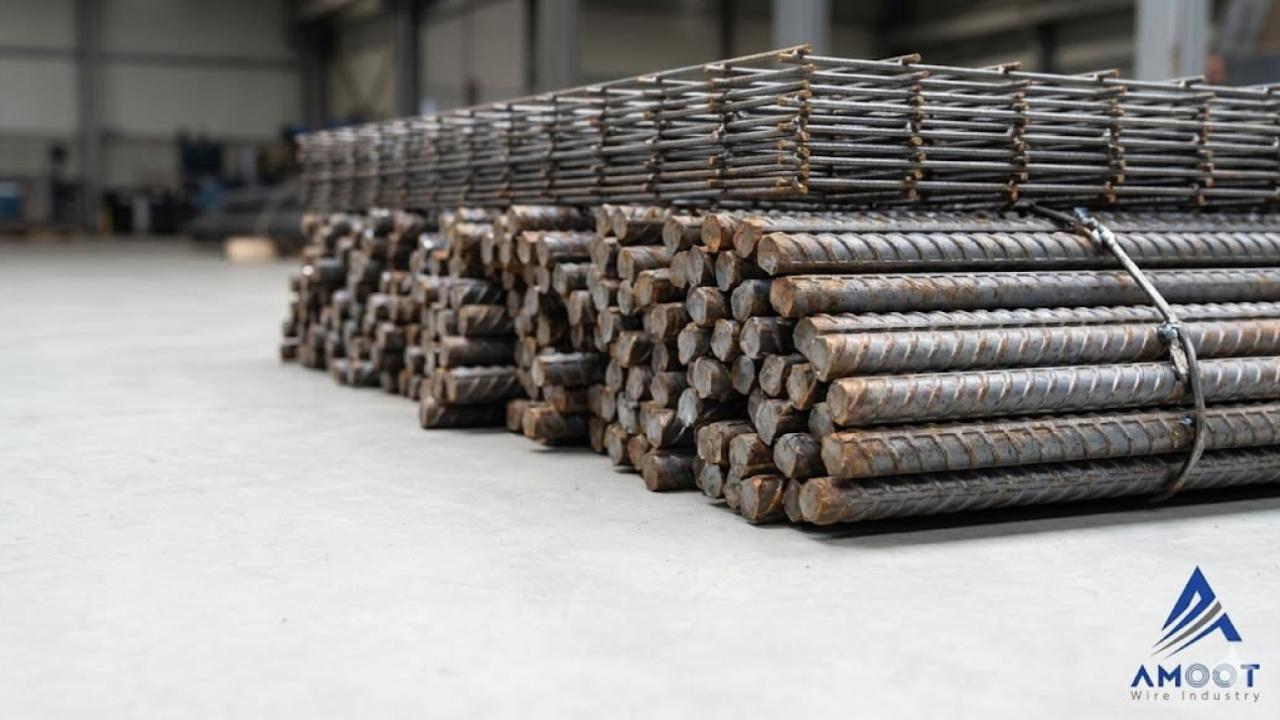
Rebars serve as the main elements that withstand tensile forces during this process. Plain rebars are typically used for shaping components such as supports, stirrups, and chairs because of their higher flexibility. Ribbed rebars, on the other hand, provide better bonding with concrete and help transfer stress more effectively, making them the standard option for structural concrete skeletons. Selecting the correct type and size of rebar is determined based on structural drawings and must be done with precision.
Rebar Binding Wire
Binding wire holds rebars in place and prevents them from shifting during concrete placement. The best type is black annealed wire, softened through heat treatment to provide proper strength and flexibility during tying. The standard diameter for binding wire is 1.5 mm, as it bends easily without breaking and ensures a strong connection. Dry or rusty wire often produces weak knots and makes the work more difficult.
Tools Used in Rebar Placement
Tools complete the process of proper rebar installation. Pliers are the main tool for tying, twisting, and cutting wire, and almost all knots are made using them. Other tools such as measuring tapes, wire cutters, hooks, and in larger projects, automatic rebar tying machines are used to increase speed and consistency.
List of Tools:
-
Pliers
-
Measuring tape
-
Wire cutter
-
Manual hook or automatic rebar tier
Stages of Rebar Placement in Construction
Rebar placement is a precise, multi-stage process, with each step directly affecting the performance of the structure. It begins with the design phase, where engineers determine the placement, type, and quantity of rebars based on structural calculations. During the execution phase, the first responsibility of the rebar worker is to read the drawings correctly and prepare the rebars.
Next, rebars must be cut to the specified lengths and bent as needed—especially for making stirrups, hooks, and supports. Ensuring that the rebar surface is clean and free of sticky materials, oil, or deep rust must also be checked before starting.
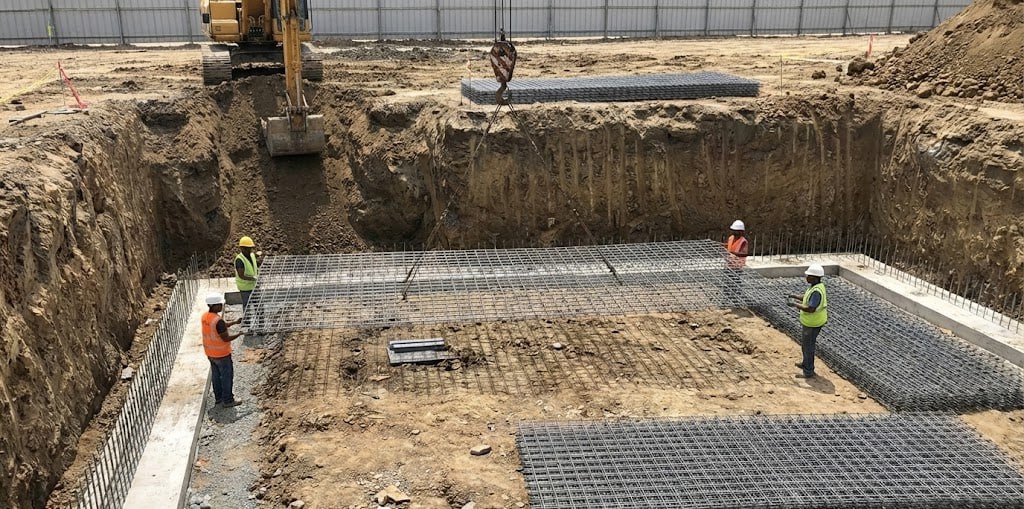
After that, rebars are placed in their designated positions and tied with binding wire. This stage is one of the most critical parts of the process and must be done carefully to ensure that the rebar network does not shift during concrete placement. Once tying is complete, the entire grid is checked for spacing, concrete cover, stirrup placement, and lap splice length, and then prepared for concreting.

Types of Rebar Knots
Tying binding wire is one of the most specialized aspects of the job. Choosing the correct knot ensures stable and standard connections. Each knot type is suited to a specific condition, and the rebar worker must choose the most appropriate option based on the structural requirements.
Simple (Slip) Knot
One of the most common methods, typically used for horizontal surfaces such as floor or foundation mesh. It offers fast execution and is suitable for rebars with normal diameters. Although its strength is moderate, it is sufficient for most horizontal applications.
Cross Knot
Used when rebars have larger diameters or when a higher force is applied to that structural point. In this method, the wire is wrapped from two different directions, resulting in a much stronger connection compared to the simple knot.
Saddle (Hitch) Knot
Mostly used in columns, particularly for connecting longitudinal rebars to stirrups. These areas require rebars to remain fully stable against tensile forces and vibration during concrete placement, and the saddle knot performs best in these conditions.
Friction Knot
Used when the rebar surface is smoother or when there is a higher risk of slipping. This knot creates increased friction at the connection point to prevent movement or rotation of the rebar.
Comparison Table of Knot Types:
| Knot Type | Application | Wire Consumption |
|---|---|---|
| Simple | Floor mesh, foundation | Low |
| Cross | High-pressure points, thick rebars | Medium |
| Saddle | Columns and shear walls | Medium to high |
| Friction | Smooth or slippery rebar areas | Low to medium |
Key Considerations and Common Mistakes in Rebar Placement
In any construction project, adhering to technical guidelines in rebar placement has a direct effect on the safety and lifespan of the structure. One of the most important considerations is maintaining the standard spacing of stirrups; deviations reduce shear resistance in columns and beams. Another critical point is lap splice length. If the overlap is less than standard, force transfer becomes ineffective, weakening the structure.
Another mistake is using dry or rusty binding wire. These wires become brittle during tying and may loosen during concreting. Maintaining proper spacing between rebar and concrete surface using spacers (rebar chairs) is also essential to ensure adequate concrete cover and prevent rebar corrosion.
Calculating the Required Binding Wire Weight
There is a general guideline for estimating the required binding wire. Typically, for every one ton of rebar, about 7 to 10 kilograms of binding wire is consumed. This amount varies depending on the structure type, rebar density, number of knots, and rebar diameter.
Heavy structures, such as deep foundations or columns with high rebar quantities, tend toward 10 kg, while lighter structures or low-density meshes use around 7 kg. This calculation helps buyers more accurately estimate the required amount of wire.
Conclusion
Rebar placement can be considered the heart of reinforced concrete structures, where execution quality, rebar type, and the skill of the rebar worker directly affect building safety. Choosing the right materials, following technical guidelines, and using soft, standard binding wire play key roles in improving the structure’s strength and execution speed.
If you need to purchase 1.5 mm black annealed binding wire, our experts at Amoot Sazeh are ready to offer the best recommendations based on your structure type, consumption level, and budget.